
Infrastructure
Israeli Firm IDE Would Privately Own Planned Harbor Island Desalination Plant Near Corpus Christi
The Nueces River Authority has picked IDE Technologies, an Israeli desalination company, to finance, build and own a planned 100-million-gallon-per-day seawater plant on Harbor Island near Corpus Christi, part of a project estimated at $6.4 billion.
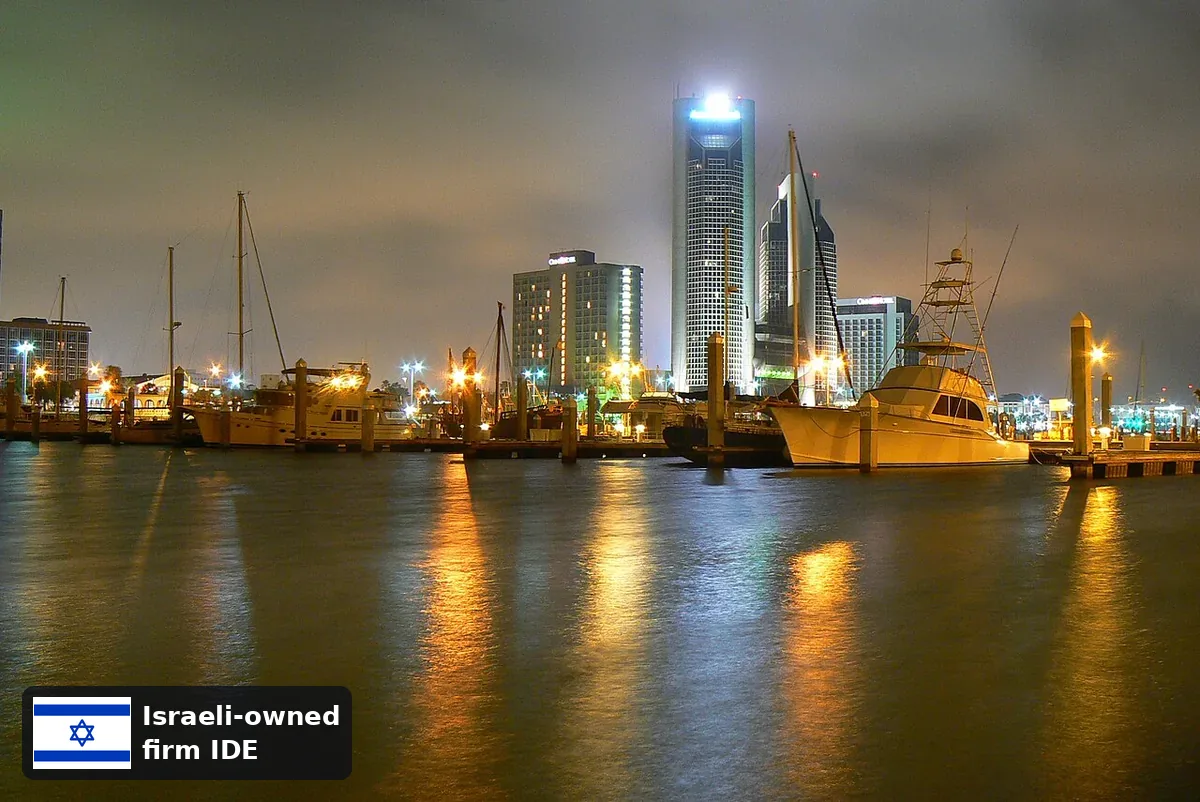
A small Texas water agency is moving ahead with plans for what would be the largest seawater desalination plant in the Western Hemisphere, and the plant would not be publicly owned. IDE Technologies, an Israeli desalination company, would finance, build, own and operate the facility on Harbor Island near Corpus Christi and sell its water through the Nueces River Authority, according to reporting by Inside Climate News, the Corpus Christi Caller-Times and KRIS 6 News.
The arrangement drew fresh scrutiny this week after Inside Climate News published an investigation on Wednesday into the deal, which it described as a major shift of a public water supply into private, foreign hands.
The vote and the deal
The Nueces River Authority’s board of directors voted unanimously on May 21, 2026, at its meeting in Robstown to select IDE Technologies as the development partner for the Harbor Island Seawater Desalination Plant, KRIS 6 News and the Caller-Times reported. The board’s agenda shows the action also authorized Executive Director John Byrum to enter into a Phase 1 development agreement with the company. That first phase covers permitting, design of a plant that can be expanded, securing electric power and lining up customers, KRIS reported.
IDE says it has built more than 400 desalination plants in 40 countries. Inside Climate News reported that the company was once owned by the Israeli state and moved to private ownership in the 1990s. In a June press release, IDE said the Harbor Island plant is designed to deliver 100 million gallons of water per day and called it the largest seawater desalination facility in the Western Hemisphere. Corpus Christi city documents reported by the Caller-Times show the plant could later be expanded to as much as 450 million gallons per day.
The plant would sit on roughly 30 acres of Harbor Island, land that the river authority leased from the Port of Corpus Christi in 2025. The Caller-Times reported the lease runs 50 years with an option to renew.
Who pays, and how
Byrum told KRIS the full project would cost about $6.4 billion: roughly $3.2 billion for the plant, to be funded through the private partnership, and about $3.2 billion for a pipeline system. IDE would finance and build the plant, while the river authority develops the pipelines, which would run more than 200 miles inland toward the Austin area, according to Inside Climate News. Last fall, Byrum had put the total at $5.5 billion to $6 billion.
The project’s financial foundation is a set of “take-or-pay” contracts. Cities and water districts that paid fees to reserve water will be asked to sign binding agreements that commit them to pay for their reserved supply regardless of whether they use it, KRIS reported. A request for proposals obtained by Inside Climate News said the developer could finance the plant with “a combination of private debt and equity.”
Corpus Christi is the largest prospective buyer. In October 2025, the City Council approved a nonrefundable payment of about $2.74 million to reserve 50 million gallons per day, or 56,007 acre-feet per year, from the plant, according to city records. Inside Climate News reported that about 15 other small cities and districts have also paid to reserve water, and that industrial customers are expected to buy from the plant as well.
The price of the water is not yet known. IDE plans to announce one in January, after which Corpus Christi will decide whether to sign a long-term contract, Inside Climate News reported. The river authority had previously told prospective developers that seawater desalination generally costs $10 to $15 per 1,000 gallons, and the Caller-Times reported the authority would not agree to cap a future take-or-pay price at $15.
Timeline
The Texas Commission on Environmental Quality approved the plant’s final permit on Sept. 23, according to Inside Climate News. Construction had been expected to begin in 2027, and Byrum told KRIS in May that the authority was still aiming to deliver water to Corpus Christi by December 2029, though he acknowledged schedules can slip.
The authority’s own finances have been strained. KRIS reported in May that its chief financial officer had warned the agency might not have enough revenue to operate through the end of the fiscal year. In August, the Texas Water Development Board approved a $7 million grant for the project’s pipeline work at the direction of the governor’s office, Inside Climate News reported. Byrum announced his resignation in September, days before the board was set to discuss his possible termination.
Corpus Christi’s own plant was canceled
The Harbor Island deal follows the collapse of Corpus Christi’s own effort to build a city-owned desalination plant on the Inner Harbor. After a 13-hour meeting, the City Council voted shortly after 1 a.m. on Sept. 3, 2025, to end the contract for that plant, The Texas Tribune reported. The council rejected a $50 million amendment that would have let contractor Kiewit carry the design to 60% completion, KRIS reported. Inside Climate News reported that the city had insisted on public ownership for that project and that cost estimates had surged.
The debate over private ownership
Some local officials are wary of buying water from a privately owned plant. “I’m quite reluctant to move in that direction,” Corpus Christi City Council member Roland Barrera told Inside Climate News. “It’s better that the public agency owns the system.” Barrera said he worries about what prices cities will face when long-term contracts expire. Mary Grant of the advocacy group Food and Water Watch told the outlet that private projects pay more to borrow money than public utilities do, costs she said end up on customers’ bills.
At an earlier river authority presentation, David Pruitt, then a council member in Ingleside, questioned the structure in which towns pay to reserve water and then must still buy it. “I’ve never seen it this way,” he said, according to Inside Climate News.
Supporters argue private ownership shifts risk away from taxpayers. Under such deals, customers lock in a water price before construction, and the developer bears cost overruns, Inside Climate News reported. “The private people put skin in the game,” IDE’s Texas business development director, Mark Ellison, told the outlet. Council member Gil Hernandez said the private sector builds for far less than cities do, and IDE’s Ellison told KRIS the company plans to share both the risk and the financing. Ellison has called the costly water “an insurance policy” because, he said, it is the one supply “that won’t run out.”
Commentary: Kacee Allen’s Take
This section is opinion from Kacee Allen, host of The Kacee Allen Show. It is not news reporting.
I want Texas to have water. Nobody who has watched Corpus Christi ration and scramble through this drought thinks the status quo works. Seawater desalination may well be part of the answer. But the question here is not whether to build a plant. It is who owns it when it is built.
Water is not a luxury product. It is the most basic piece of critical infrastructure there is. Hospitals, homes, refineries and military installations along the Gulf Coast all depend on it. When a plant like this becomes the backbone of a region’s supply, the people who rely on it should own it, or at the very least control it, through officials they can vote out.
Instead, the plan puts a foreign company in the owner’s seat and asks local governments to sign take-or-pay contracts before anyone knows what the water will cost. Read that again. Cities would promise to pay for decades of water whether they need it or not, at a price that has not been announced, from a plant they will not own. When those contracts run out in 20 or 30 years, who sets the price then? Not the voters of Corpus Christi.
Supporters say private money protects taxpayers from risk. Maybe some of it does. But ratepayers are taxpayers, and a take-or-pay contract moves the biggest risk right back onto them. If demand forecasts are wrong, the cities still pay. If the river authority stumbles, as its own money troubles suggest it might, the cities are still on the hook.
This is not about any one nation. I would say the same thing if the owner were Chinese, Canadian or anyone else. America-first means American control of the things America cannot live without: our power grid, our ports, our food supply and our water. Texas has the talent, the capital and the engineering muscle to build this plant and keep it in public hands. The legislature and Congress should look hard at whether critical water systems should be foreign-owned at all.
This is insane that we’re allowing a foreign entity to have this much blatant control over our water supply. This is what our founding fathers warned us about, and created this country for.
Editor’s note: The news sections of this report were compiled by the Kacee Allen Network News Desk. The May 21, 2026, vote was confirmed through KRIS 6 News, the Corpus Christi Caller-Times and the Nueces River Authority’s posted agenda. Capacity and the “largest in the Western Hemisphere” description come from IDE’s own press release. The $6.4 billion cost and its split between plant and pipelines come from KRIS and Inside Climate News. Corpus Christi’s water reservation was checked against city records and the Caller-Times, and the cancellation of the Inner Harbor project against The Texas Tribune and KRIS. The ownership structure, take-or-pay terms, permit, grant and quotes come from Inside Climate News, KRIS and the Caller-Times as reported. The Network has not reviewed the IDE development agreement, which had not been made public. The final section, “Commentary: Kacee Allen’s Take,” is opinion from Kacee Allen.