
Air Force
Hackers Breached the Air Force's Cloud One Platform, a U.S. Official Confirms
Reuters first reported the intrusion Friday morning. The Air Force declined to discuss the security of specific systems. Who is responsible, and whether any data was taken, has not been established.
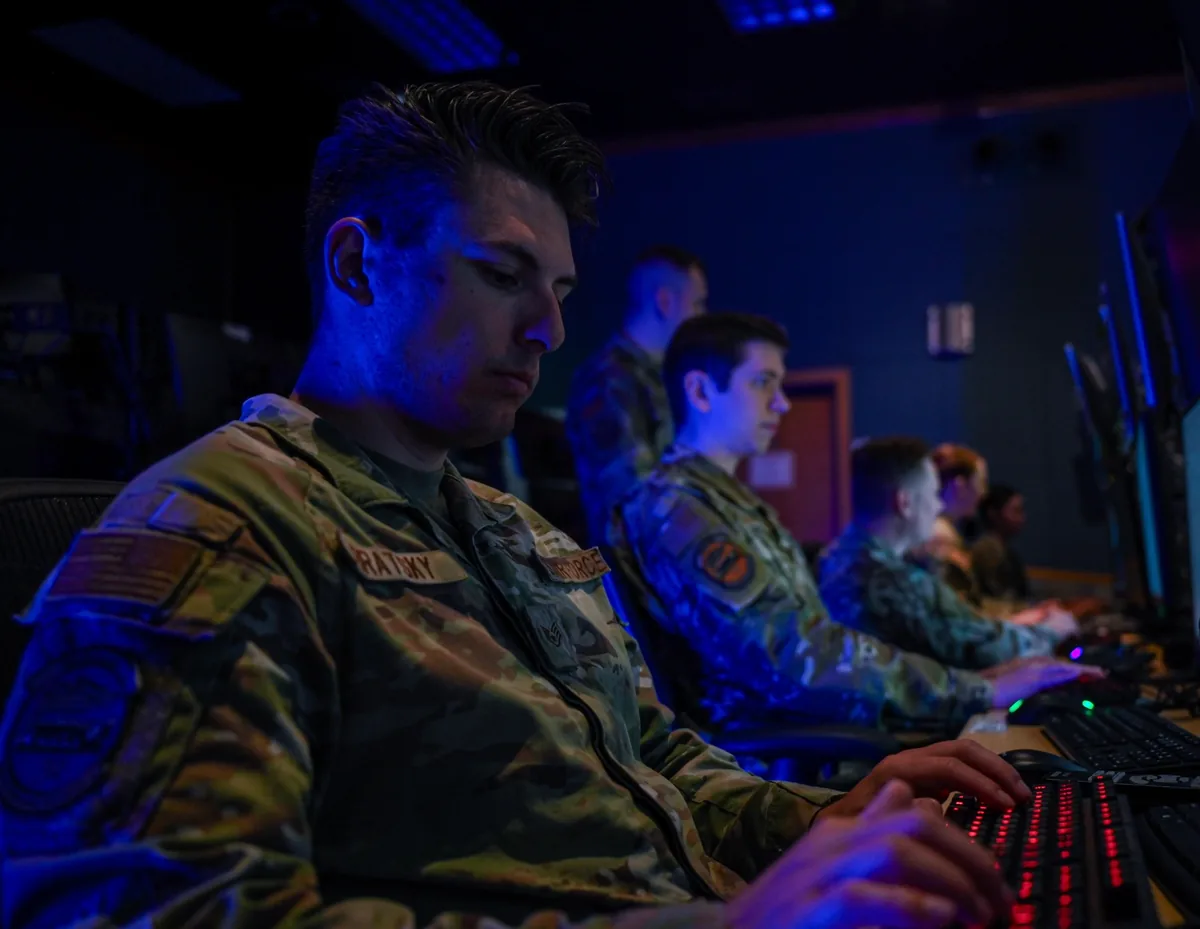
Reuters reported Friday that hackers broke into Cloud One, the Air Force’s main cloud computing platform, citing three people familiar with the matter. A U.S. official later confirmed the breach to NBC News but could not say when it happened or what, if anything, was exposed.
The report, first posted on X early Friday by Mike Stone and Raphael Satter, said the intrusion could put tactical, personnel and logistics data at risk. Reuters could not establish who was responsible, how far the break-in went or whether any data was stolen. Two of the people said the intrusion was found during upgrade work in roughly the past month and has disrupted the platform.
What Cloud One does
Cloud One is the Air Force’s enterprise cloud. The official Cloud One site says the program started in 2017. A Sept. 12, 2024, article from Air Force Materiel Command says it runs on Microsoft Azure, Amazon Web Services, Oracle Cloud Infrastructure and Google Cloud Platform.
Reuters reported that applications on the platform include systems that gather North American air-defense radar feeds and track munitions at more than 200 Air Force sites. Those applications were not independently confirmed on official public pages. Reuters also said SAIC was the prime contractor until 2025, when Leidos took over.
What the Air Force said
The Air Force did not confirm the breach in its own words. In a statement to Reuters, the service said it “does not comment on the security posture, vulnerabilities or operational status of specific networks and systems. We continuously take prudent measures to protect Department (of the Air Force) information, systems and mission capabilities.”
One of Reuters’ sources called the incident “a big deal.” The same report, citing one person, said investigators had brought in U.S. Cyber Command to assess the damage. Cyber Command did not comment, Reuters said.
Reported disruption
Reuters, citing anonymous sources, described a pause in moving back-office applications onto Cloud One, a block on updates to applications already there, and, according to a fifth person, the revocation of some administrator rights. One source said the intruders used a software flaw to reach the control plane, compared to a “universal remote,” and could in theory have checked aircraft status or spare-parts movements. Reuters could not say whether that happened or identify the flaw.
Reuters also noted other recently disclosed U.S. government cyber incidents, which this article does not independently verify or treat as connected.
Kacee Allen’s Take: Does this still look like a coincidence?
Opinion by Kacee R. Allen.
Officials have not said who broke into the Air Force’s main cloud. After other incidents this month, and a run of bank, airline and tech outages, I keep coming back to a question I asked on Nov. 19: does all of this still look like a coincidence?
I laid out five theories in a YouTube Short, “What’s Really Causing Cyberattacks and Outages.” The written framework has five points; in the Short I numbered four, combining the last two. They are questions, not conclusions, and none has been established for Cloud One:
- Could the U.S. government be causing or allowing incidents as a false flag, to pin them on Iran and build support for the war?
- Could this be unintended blowback from accelerating AI — rushed software patches, aging systems, and strain on infrastructure?
- If a foreign government is involved, could it be a state actor, with China or Russia more likely than Iran or Israel?
- Could it be a domestic civilian, acting on their own and not working for any government?
- Could it be an independent actor overseas, also unaffiliated with a government, and possibly using AI tools?

Editor’s note: The news sections draw on Reuters, NBC News, The Guardian, the official Cloud One site, and a 2024 Air Force Materiel Command article. The Air Force has not itself confirmed the breach. The hackers’ identity, whether data was stolen, the vulnerability, the reported disruption, and Cyber Command’s involvement remain unconfirmed by the Air Force. The five theories are Kacee R. Allen’s views from his Nov. 19 Short and the research used to make it. No earlier article on this site lists those points.