
Courts
Full Fifth Circuit Rules Detained Immigrants Have No Constitutional Right to Bond Hearings
A divided federal appeals court ruled Friday that immigrants detained while their deportation cases move forward have no constitutional right to a bond hearing, even when they have lived in the United States for many years.
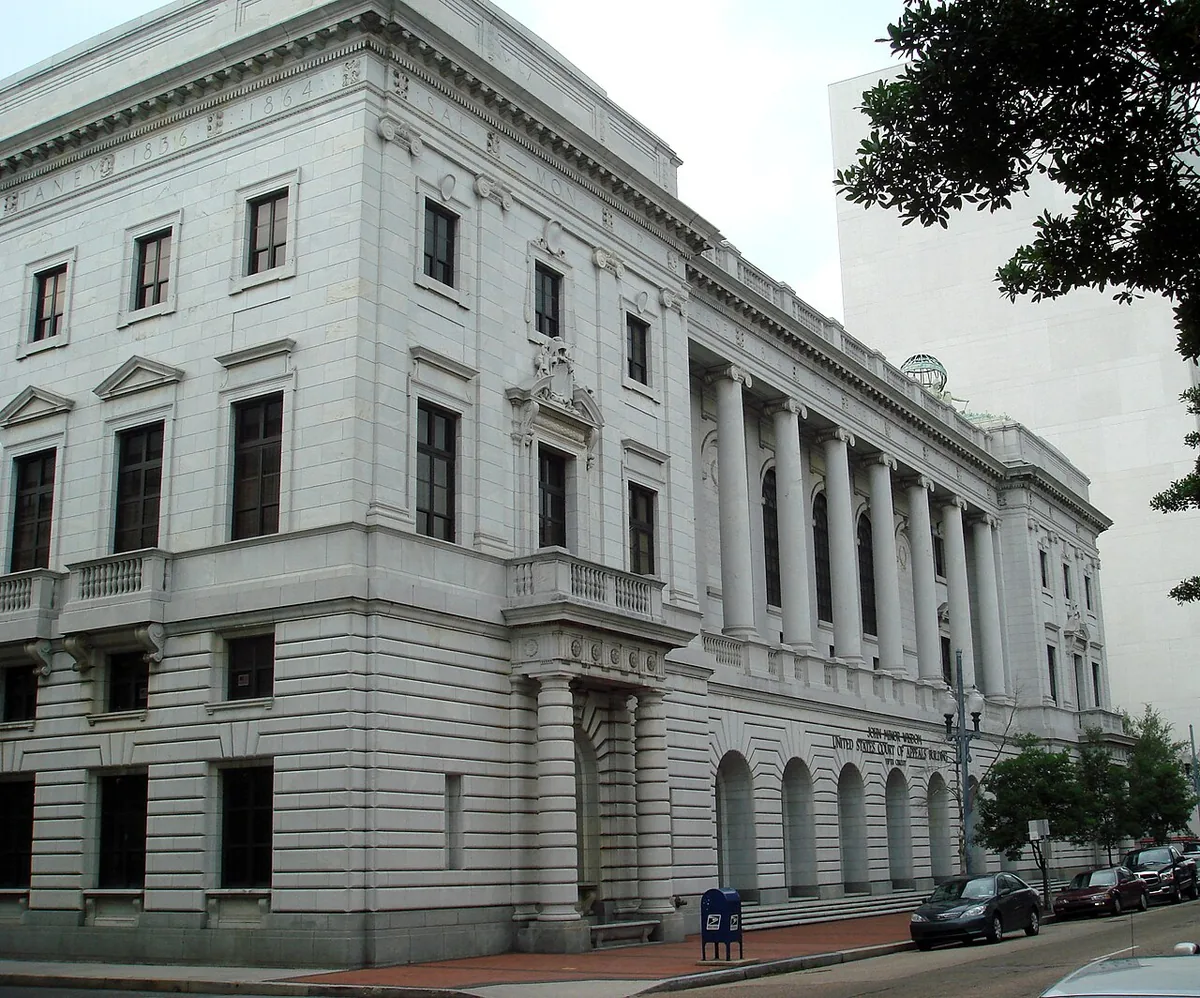
A divided federal appeals court ruled Friday that immigrants detained while their deportation cases move forward have no constitutional right to a bond hearing, even when they have lived in the United States for many years.
The full U.S. Court of Appeals for the Fifth Circuit, which hears cases from Texas, Louisiana and Mississippi, decided the matter 10-7 on Oct. 23, 2026. The ruling reverses three lower-court decisions in the Western District of Texas that had ordered the men released and barred immigration authorities from holding them again without first giving each an individual hearing on flight risk and danger to the community.
The three cases
According to the opinion, the petitioners are Ignacio Sosnava Rodriguez, a Mexican national who had lived in the country without admission for more than 22 years; Alejandro Villegas Angel, a Mexican national living in the U.S. since 2011 who has two U.S.-citizen children; and Miguel Angel Gomez Alvarado, a Honduran national living in the U.S. since 2012 who has one U.S.-citizen child. Each was taken into Immigration and Customs Enforcement custody after a traffic stop between November 2025 and February 2026, and each won a habeas corpus petition in district court earlier this year.
All three were held under a provision of federal immigration law that the Trump administration reads as requiring detention for people who entered without being admitted. The Fifth Circuit had already adopted that reading of the statute in an earlier precedential decision this year. Friday’s ruling addressed the separate question of whether the Constitution requires a bond hearing anyway.
A three-judge panel had previously sided with the detainees and set a rule that such hearings must take place within 90 days of confinement. The full court then voted on its own to rehear the case, paused the release orders and expedited arguments.
The majority opinion
Judge Cory Wilson wrote the majority opinion, joined by eight colleagues, while Judge Priscilla Richman agreed only with the outcome. The majority said there is no dispute that the men are protected by the Fifth Amendment, but concluded that people who were never lawfully admitted are not owed procedures beyond the ones that Congress wrote into the immigration statutes.
The court also found that the length of the men’s detention raised no constitutional problem. The opinion noted that the detainees could end their confinement “at any moment by agreeing to leave the country,” adding that “in no other context implicating a core liberty interest does the detainee hold the keys to his confinement.”
The dissent
Seven judges dissented. Writing for six of them, Judge Leslie Southwick said the majority had “constructed an impenetrable wall between the Constitution and these long-term residents, a wall not designed, recognized, or even suggested by the Supreme Court.”
Southwick also wrote that the Fifth Circuit’s reading of the detention statute is “the minority position among the circuits,” pointing to a split among federal appeals courts that could send the issue to the Supreme Court. He noted that if the justices eventually reject the Fifth Circuit’s statutory reading, the constitutional question decided Friday “will have far less significance.”
Politico described the decision as the most consequential appellate ruling so far backing the administration’s detention approach, and reported that it affects thousands of ICE detainees held in Texas. Bloomberg Law reported that the seven dissenting judges were appointed by Democratic presidents or by Republican President George W. Bush.
The defendants named in the case include Homeland Security Secretary Markwayne Mullin and Attorney General Todd Blanche. The opinion was filed Friday under case number 26-50183, consolidated with two related appeals.