
National Security
Air Force Moves First Hypersonic Missile, ARRW, Into Production With $694 Million Lockheed Deal
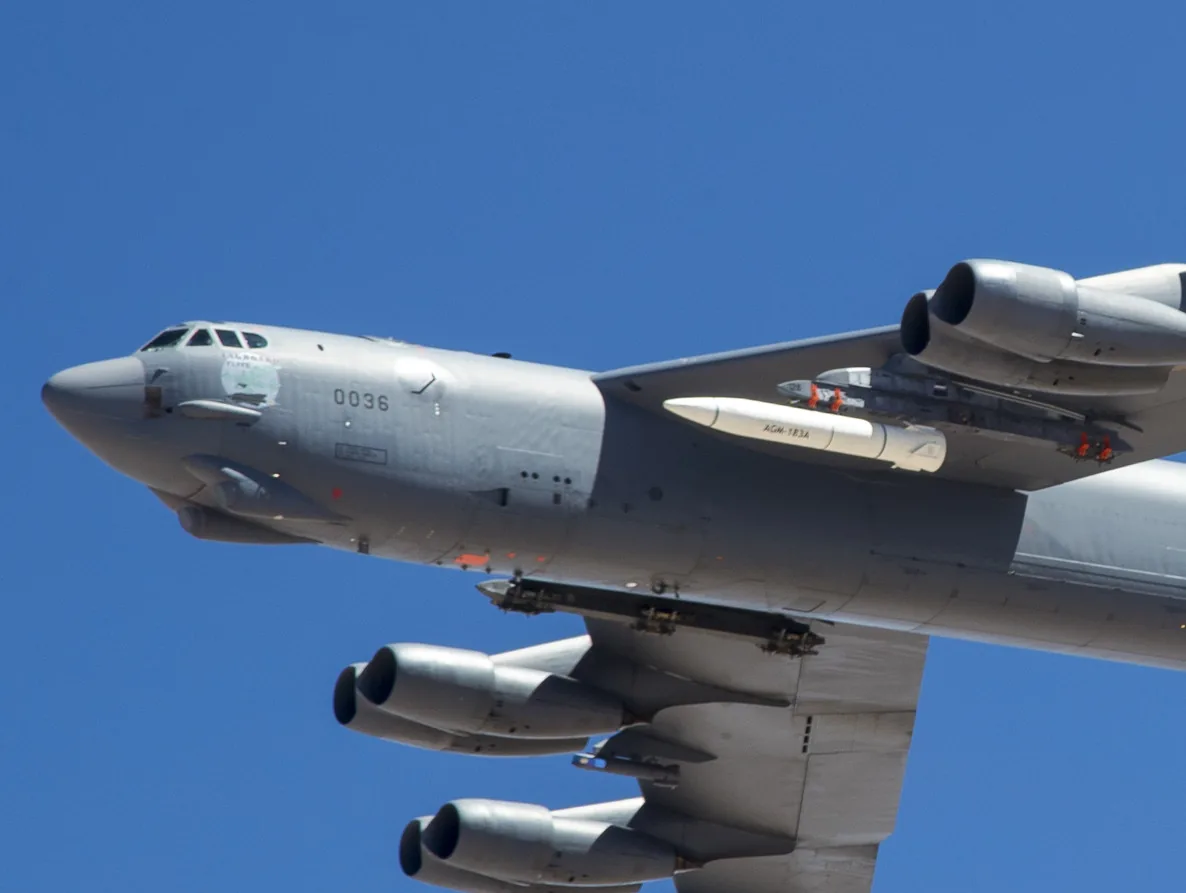
The Air Force awarded Lockheed Martin $694 million to produce the AGM-183A ARRW, moving the hypersonic missile from testing into production.
By Kacee Allen Network News Desk.
The Department of the Air Force has awarded Lockheed Martin a $694 million contract to produce and field the AGM-183A Air-Launched Rapid Response Weapon, known as ARRW, moving the boost-glide hypersonic missile from prototyping and flight testing into production. The service announced the award on Oct. 26. The contract itself was signed Sept. 29.
Editor’s note: This report is based on the Department of the Air Force’s official Oct. 26, 2026, announcement and Air & Space Forces Magazine’s coverage of the same award. Quotes from Air Force leaders are taken from the official release. The Air Force says it will not release quantities or delivery dates to protect operational security, so this report does not estimate them. The Network’s analysis is labeled below.
What the Air Force announced
According to the Air Force, the contract was executed under the Department of War’s Enterprise-Wide Agile Acquisition Contract. ARRW uses a solid-fuel rocket booster to accelerate past Mach 5 before releasing a hypersonic glide vehicle. The weapon is designed to strike time-sensitive, heavily defended, and high-value targets from standoff range.
“This is a turning point in our advanced weapons roadmap,” Secretary of the Air Force Troy Meink said in the release. He said moving ARRW from test to production gives combatant commanders “a credible, high-speed strike weapon capable of penetrating the most advanced anti-access and area-denial systems.”
Chief of Staff of the Air Force Gen. Ken Wilsbach said fielding ARRW “enhances our ability to hold targets at risk anywhere around the world.”
Air & Space Forces Magazine described ARRW as the Air Force’s first hypersonic missile to enter production.
Same day, another Pacific signal
The ARRW announcement came the same day the Pentagon, Australia, and the United Kingdom named USS Colorado as the first U.S. Virginia-class attack submarine assigned to Submarine Rotational Force-West in Western Australia, beginning in late 2027, under the AUKUS partnership.
Network analysis: deterrence on a deadline
Network analysis: The production decision matters less for any single missile than for what it signals. Washington has spent years watching rivals field hypersonic weapons while U.S. programs stayed in testing. Putting ARRW into production, alongside a new submarine rotation in Australia, points to a Pentagon trying to show that its long-range strike and Pacific deterrence plans are moving from paper to hardware. The Network previously reported on the Pentagon’s push to prepare major U.S. bases to operate for 90 days on their own. Taken together, these steps describe a military planning for a contested fight far from home. Key questions remain open, including how many missiles will be bought, when they will reach units, and how the program will be funded in future budgets. The Air Force has not answered those publicly.